
Role
Product/UX Designer
Scope
Focus
• Information architecture
• Content design
• Guided onboarding flows
Excluded
• Operational processes
• Internal tooling
Team
Caroline Berry, UI Designer
Year
2018
Duration
Six Months
A Brooklyn-based nonprofit that partners with local businesses to connect formerly incarcerated youth with meaningful internships.
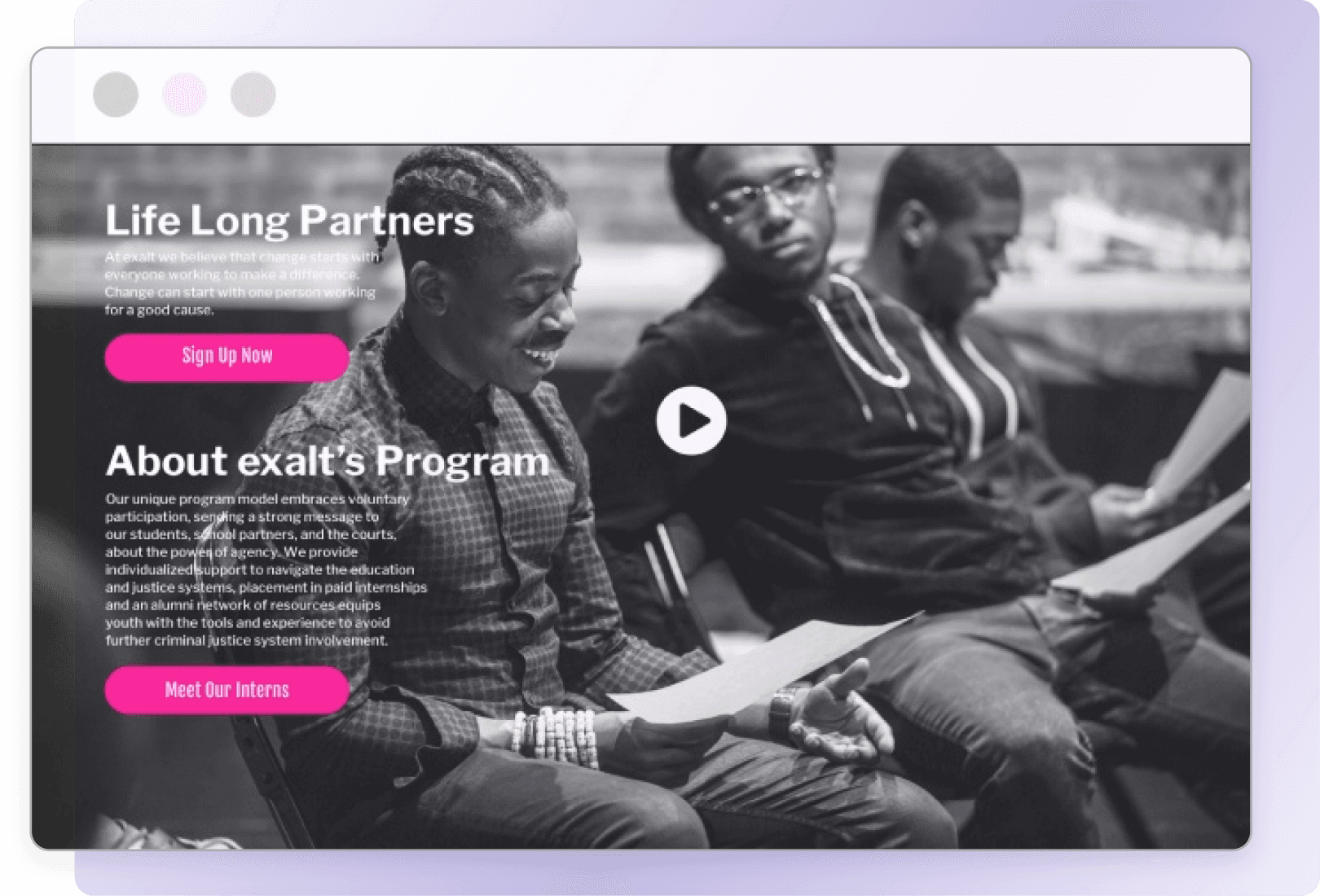
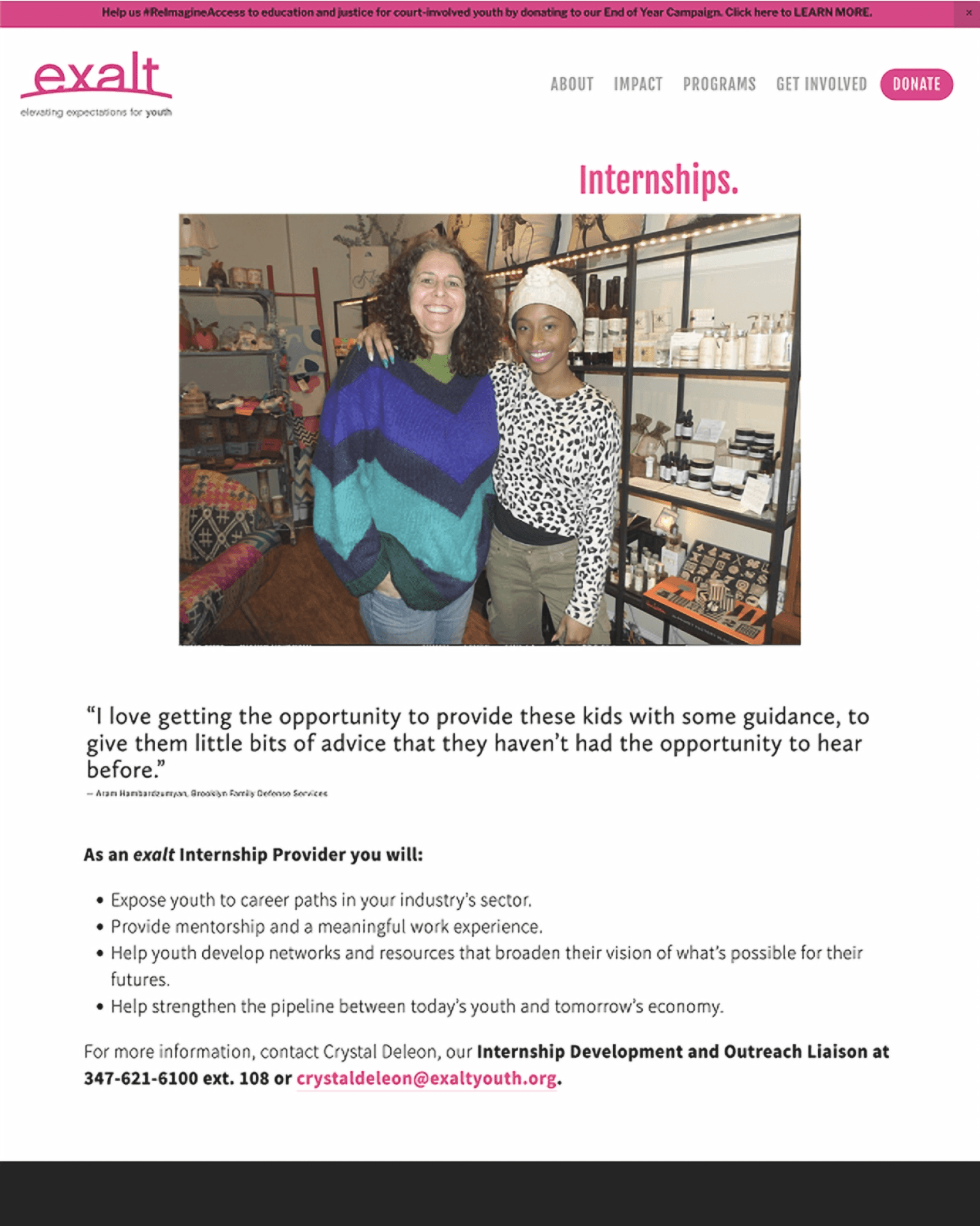
exalt’s only onboarding coordinator was overwhelmed with provider phone inquiries, a clear signal that the existing portal had significant information gaps. The existing site, a static web portal, offered little clarity on the internship process and left providers without enough guidance to move forward.
To address key information gaps, I designed onboarding pages that clarified the internship process, answered common questions, and provided clear next steps so providers could move forward without needing to contact the onboarding coordinator.
Enabled providers to complete oboarding independently, reducing reliance on the coordinator.
To understand the root of repeated provider inquiries, we interviewed past and prospective providers. Providers were contacting support because onboarding expectations were unclear, but exalt didn't yet know what specific information was missing.
Existing Experience
– Partner Organization
Does the site meet your needs?
What felt unclear or missing?
What would help you take the next step?
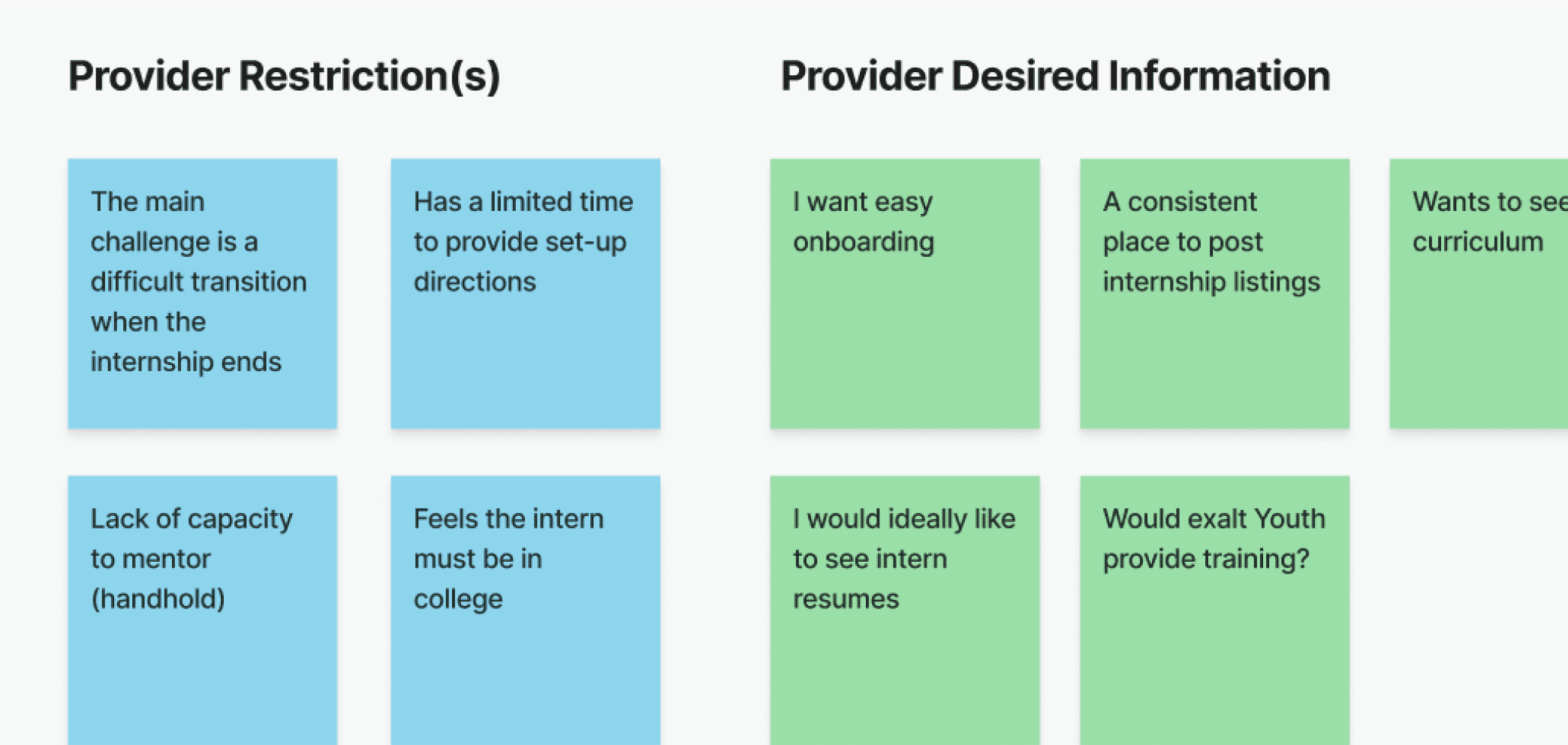
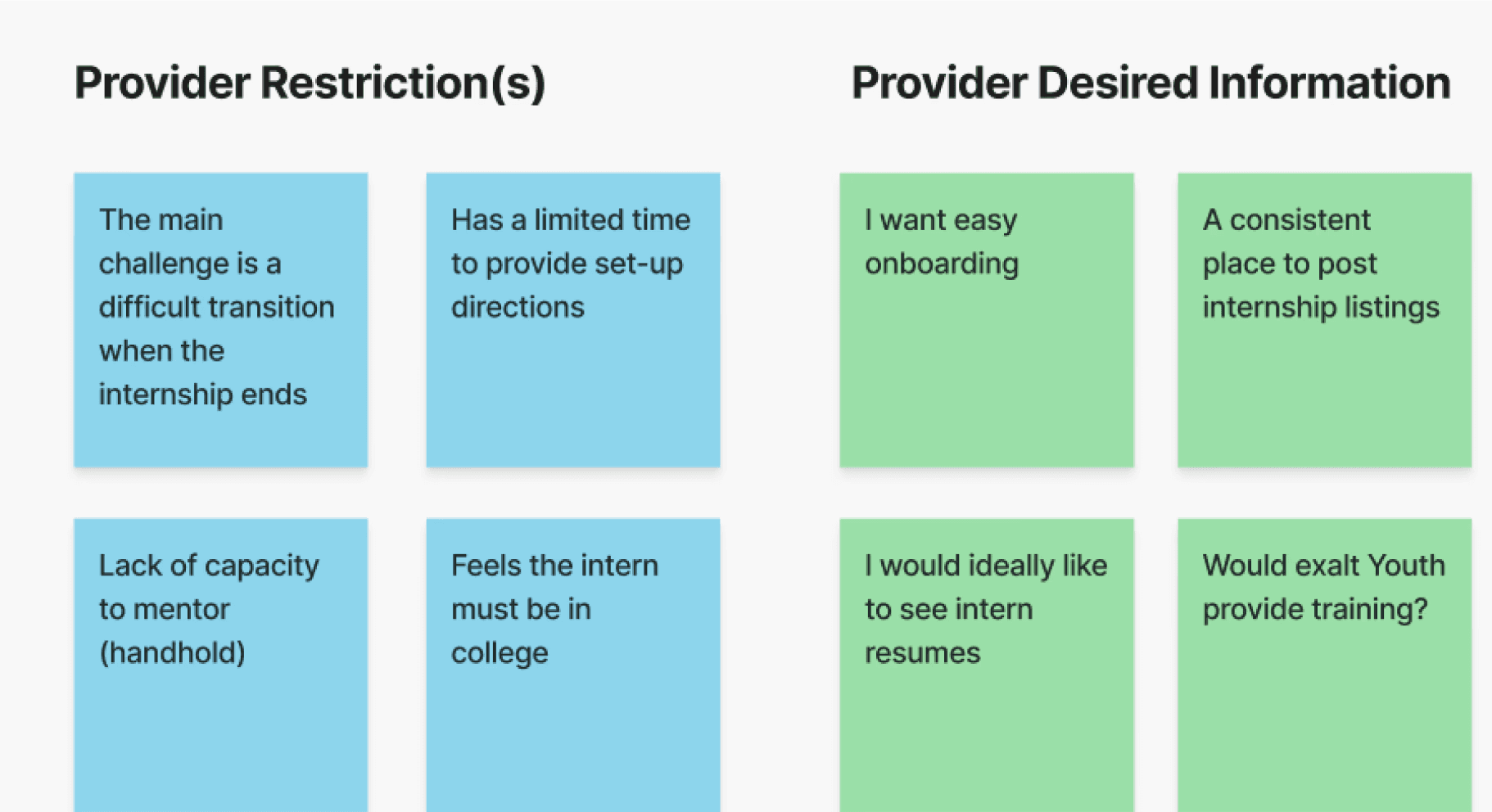
Grouping the interview findings into an affinity map surfaced recurring concerns around intern matching, job readiness, and visibility into intern backgrounds, none of which were addressed in the current portal. Returning providers also had no clear way to extend placements online and were required to call for next steps.
Research Synthesis
Key Research Themes


With personas in hand, we analyzed how similar platforms onboard and support partners to identify effective patterns. Across the three examples, we found:
These patterns informed how we structured onboarding content, built trust early, and guided providers toward completing key actions.



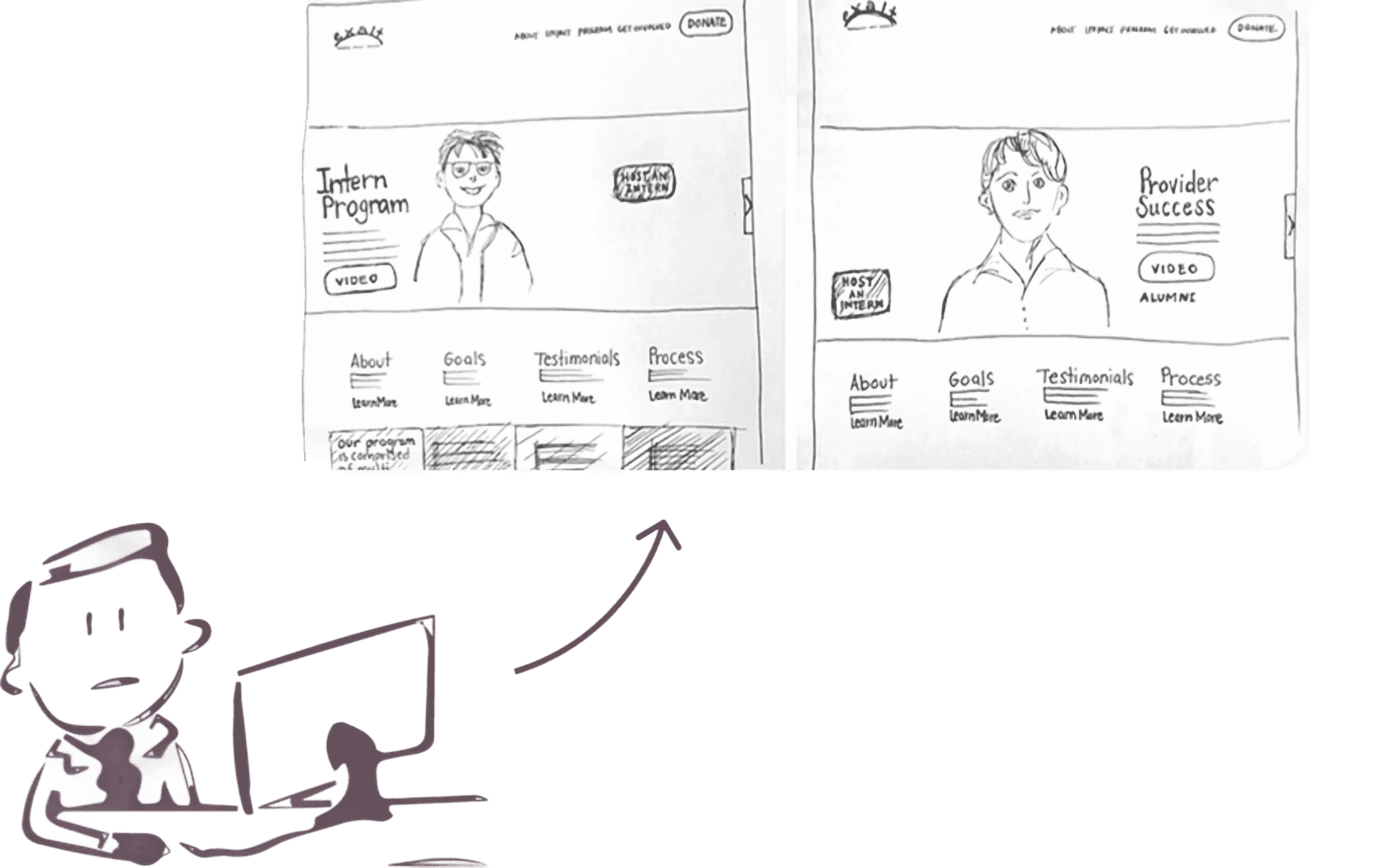

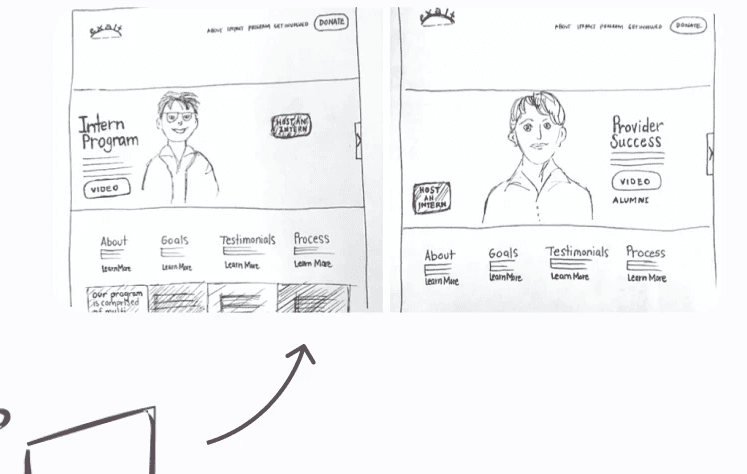
Using the storyboard as a guide, I restructured the single-page portal into two purpose-driven experiences:
A provider page clarifying the process, expectations, and next steps.
A new intern page highlighting intern stories and testimonials.
Early wireframes focused on information hierarchy, onboarding, and partnership continuation, while adding intern content to build provider trust.
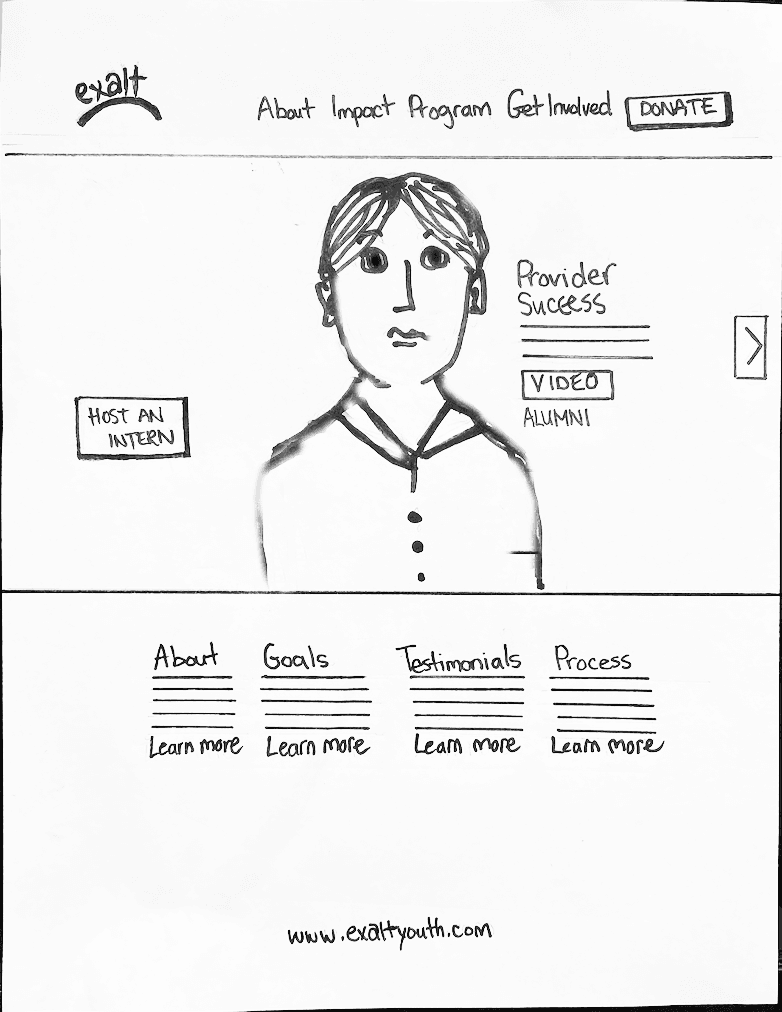

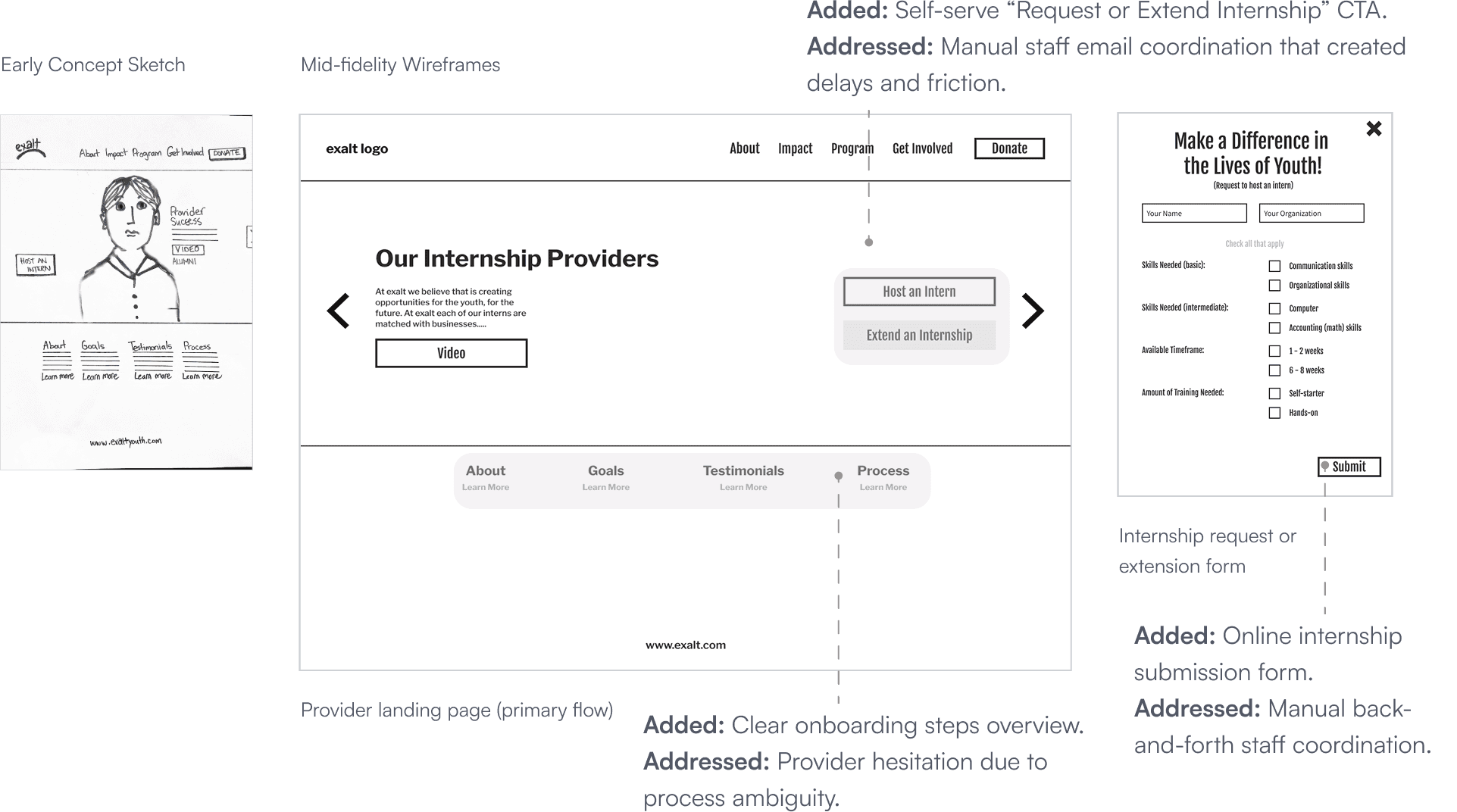
Taking our low-fidelity wireframes, I created a clickable prototype and tested it with three users. Despite having different content, users had difficulty distinguishing between the intern and provider pages.
Provider Page

Intern Page
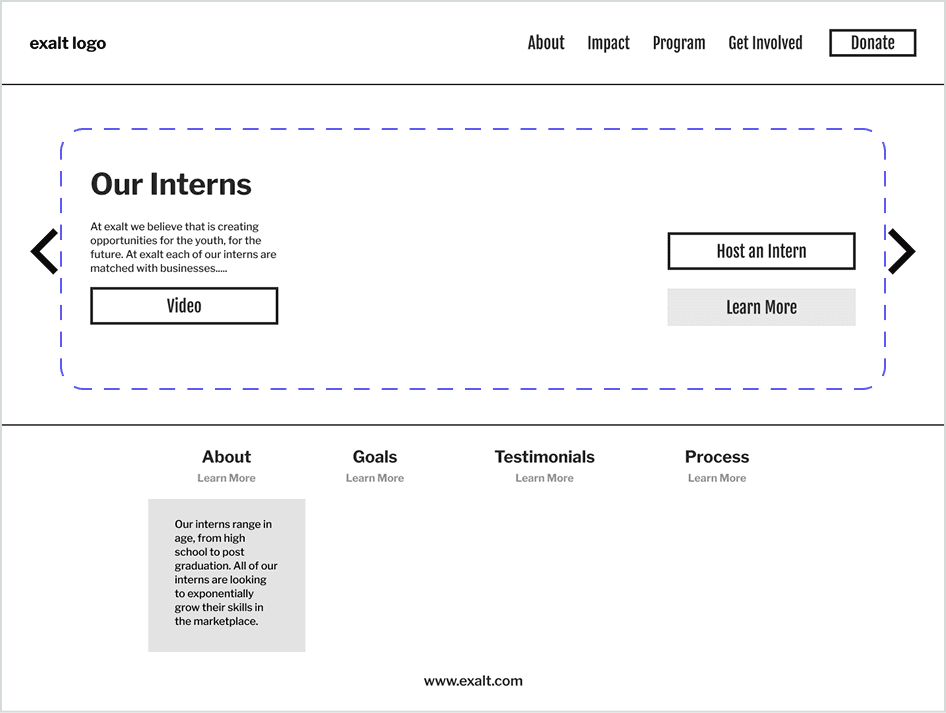
What this Uncovered
The intern and provider pages were too similar, making it difficult for users to distinguish between them.
The final designs clarified roles, reduced friction, and guided both past and potential providers toward action.
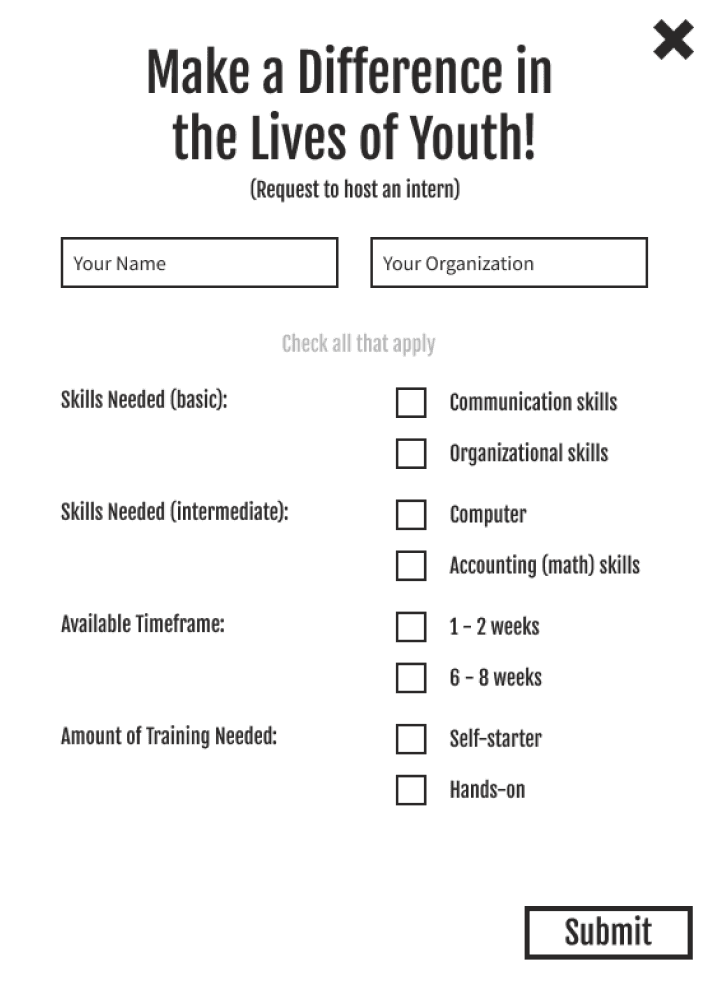
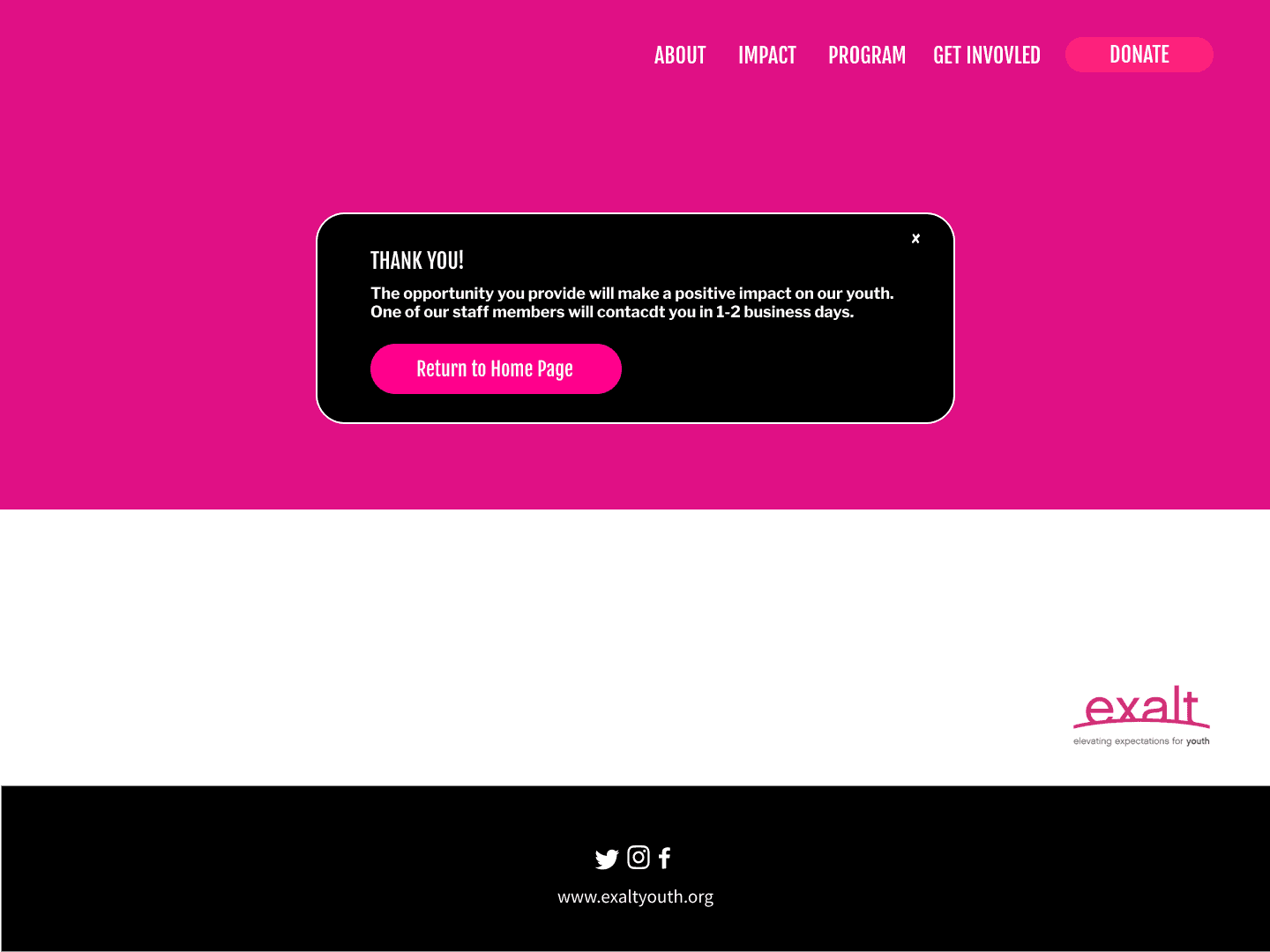
A improved experience with a dedicated Intern and Provider page, a structured onboarding flow, and a digital internship request form to request or extend internships.
Before — Landing Page
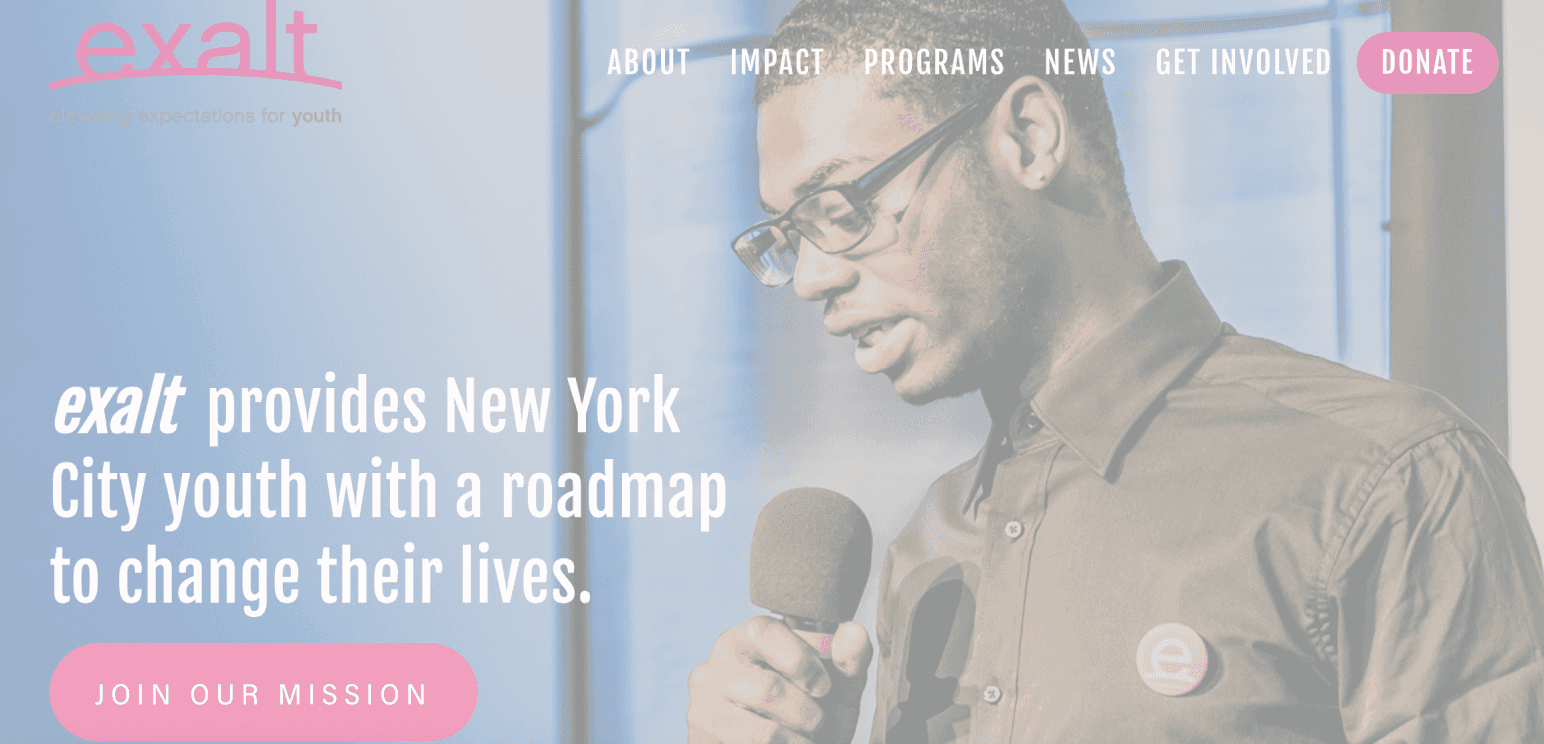
After
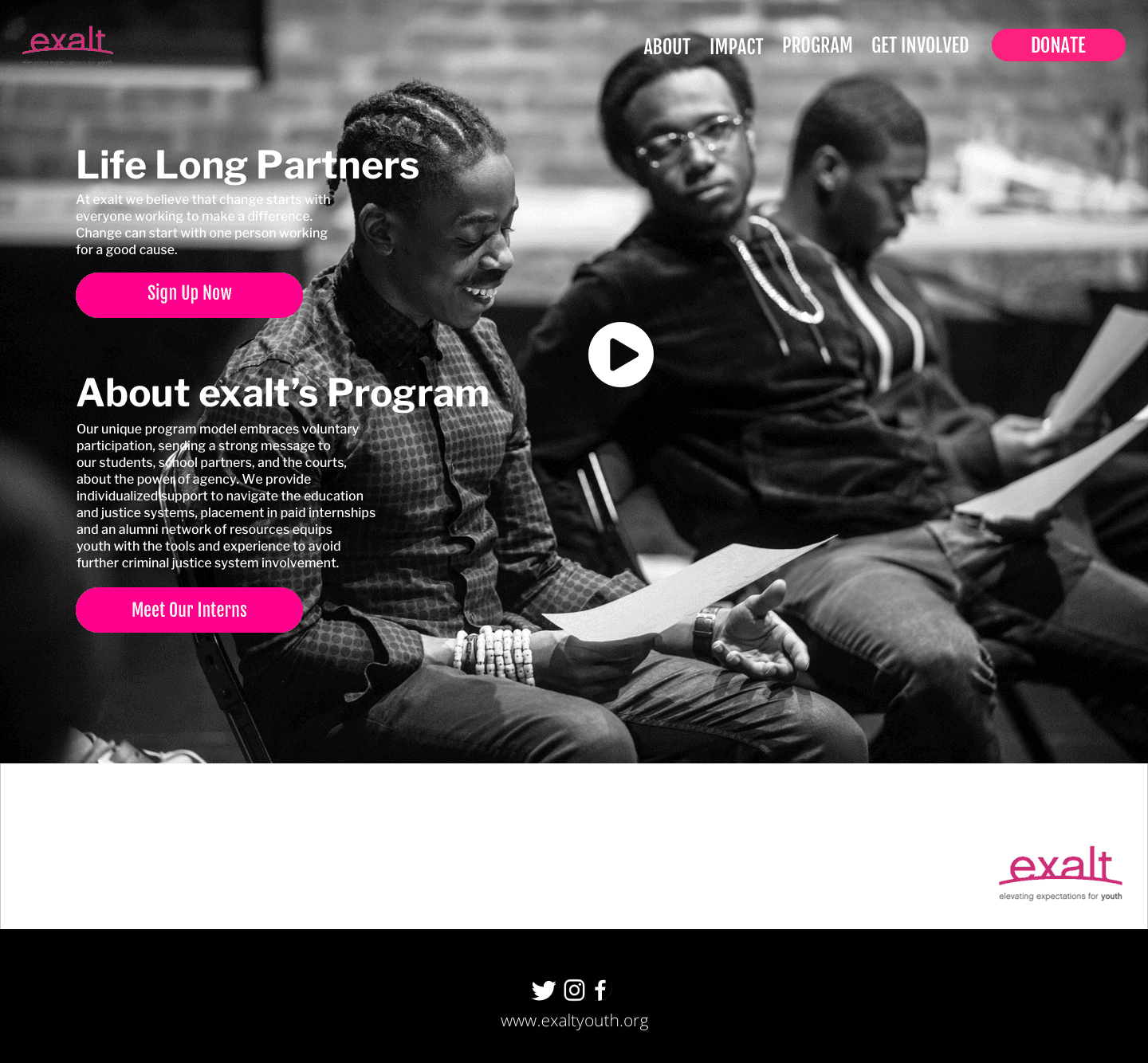
Before — Single Page
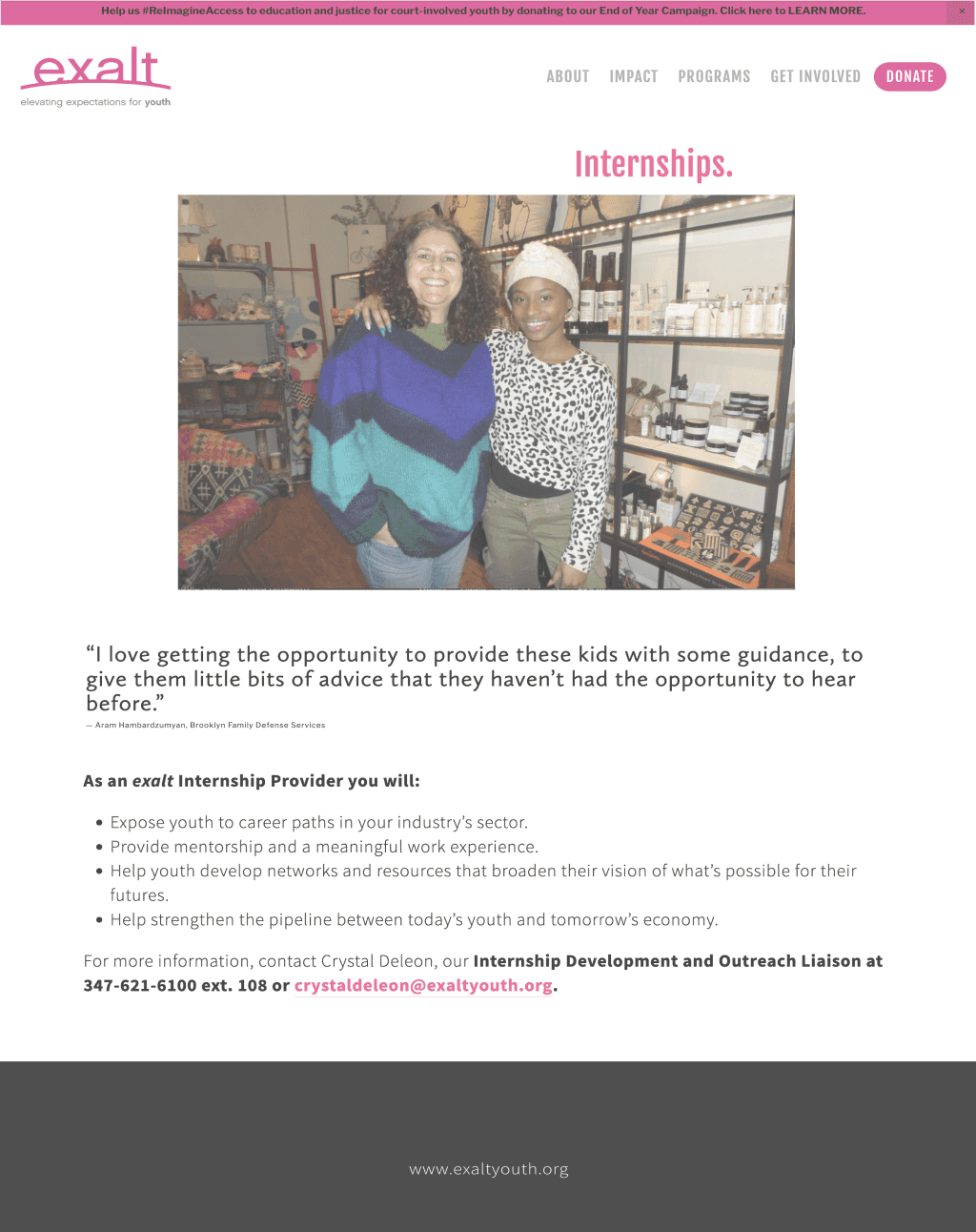
After — Split Page
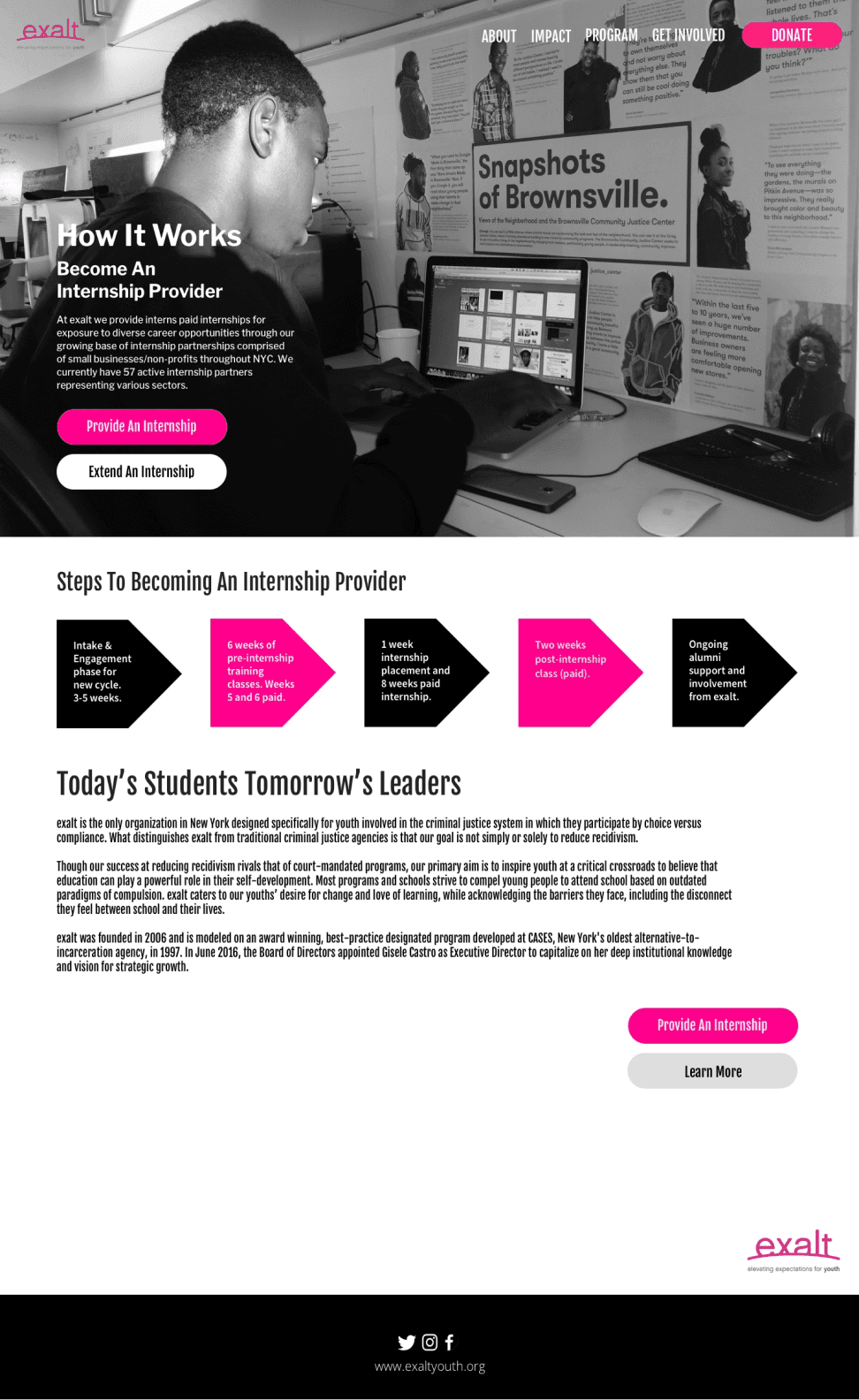
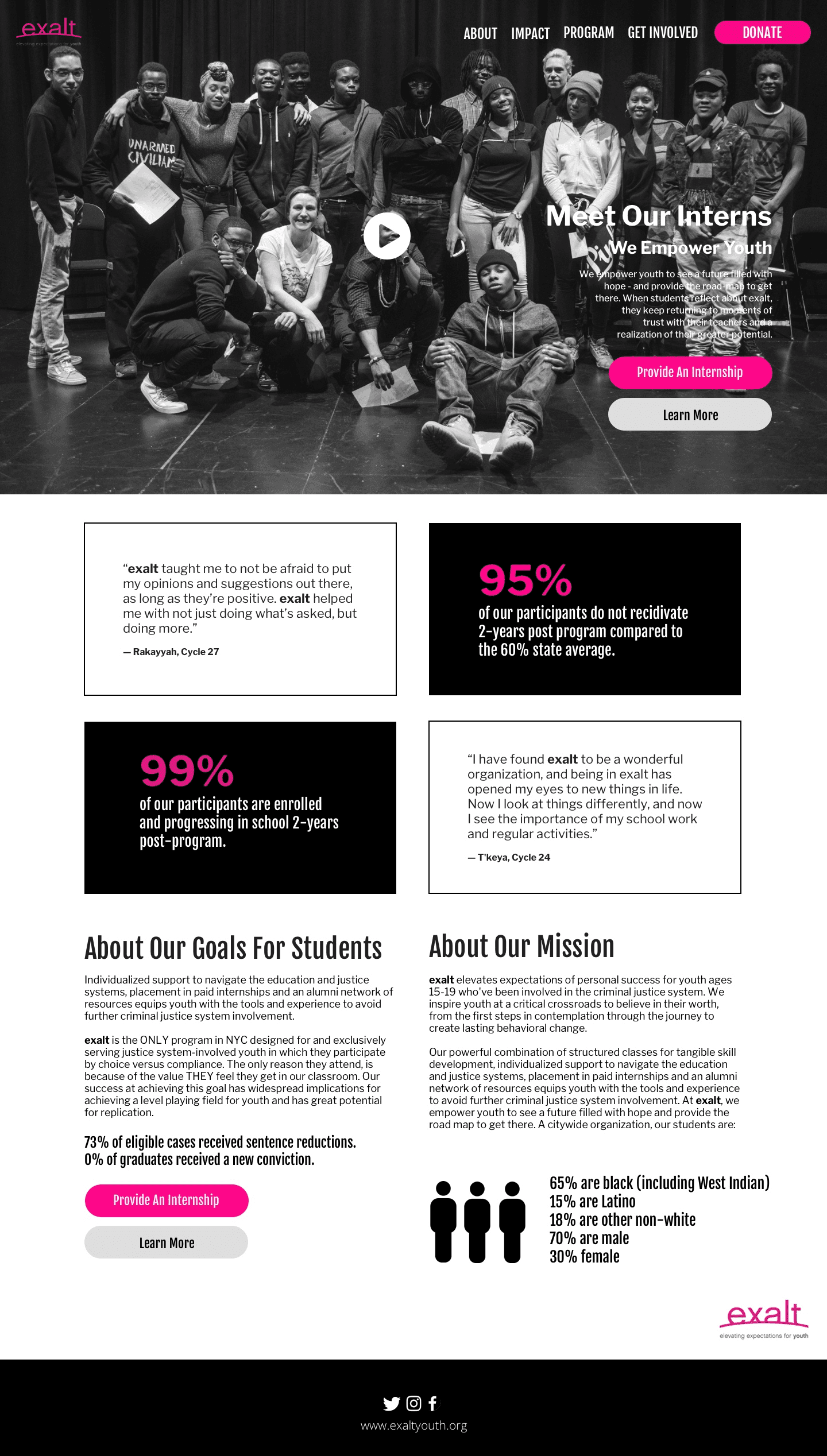
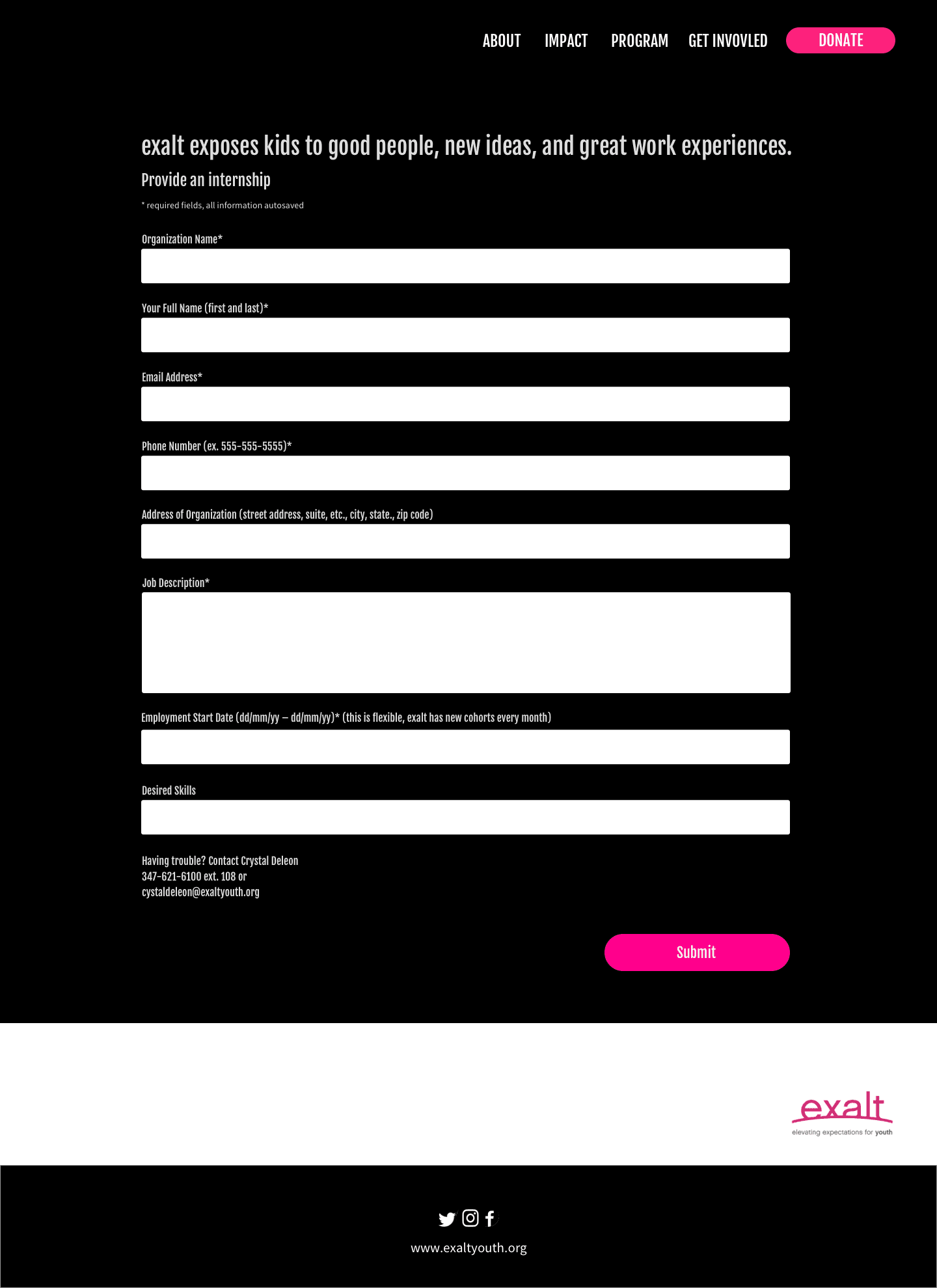
The updated final designs enabled providers to:
Complete onboarding through a guided, step-by-step flow
with clear calls to action.Find answers to common questions upfront, reducing friction
and coordinator dependency.Request and extend internships through self-serve workflows.
exalt Youth responded positively to the increased clarity and autonomy, noting the potential to significantly reduce provider phone calls and streamline onboarding.
What’s Next
Next steps for evaluating the redesign include: