Lucy Wu

2023
Mindful
Retention
Inviting User Back with Purposeful Play


About the
Project
My Role: UX Strategist,
UX Researcher, and UX/UI Designer.
Team: Product Owner, CEO
Year: 2023-2024
Duration: Six Months
Built on cognitive behavioral therapy (CBT) principles, Personal Zen is a mobile app that blends journaling and gameplay to help users manage stress and anxiety.
Gameplay Overview
After completing a brief GAD (Generalized Anxiety Disorder) survey, users receive recommended 3–5 minute playtime sessions. During play, they trace after happy, positive paths on the screen while ignoring negative faces, earning medallions at the end of each round to reinforce progress.
The Problem
Although Personal Zen was built on a strong therapeutic foundation,
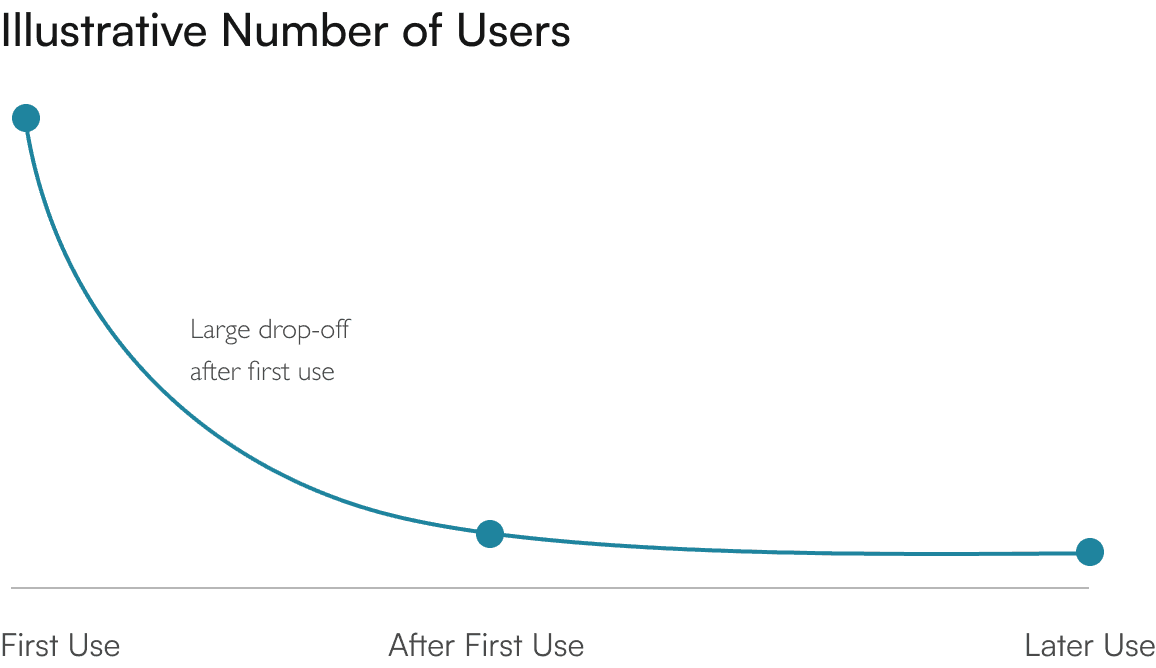
data revealed a different picture. User retention dropped sharply after onboarding and before the subscription screen. Feedback in the app store frequently described the gameplay as monotonous and unmotivating.
The Solution
To address low engagement and early drop-offs, our team focused on improving two key areas of the user journey drawing from competitive analysis and user feedback:
1. Onboarding Flow - A shorter, clearer onboarding with an optional video to help users quickly understand the app’s value and begin playing without cognitive overload.
2. Gameplay - Subtle enhanced gamification elements: points, progress tracking, and a reflective game session summary to add structure and motivation without introducing stress or competition.
Exploring
the Interface
To understand the current game experience, I conducted a cognitive walkthrough and full UX audit. I started with the onboarding flow, spanned six steps, the moments above highlight where friction most impacted time-to-play.
Key Observations
The initial flow relied heavily on text and forcing users through a long sequence of steps before play began.
Guided Feedback


Onboarding Tutorial

Onboarding copy required user to read multiple instructional messages before gameplay.
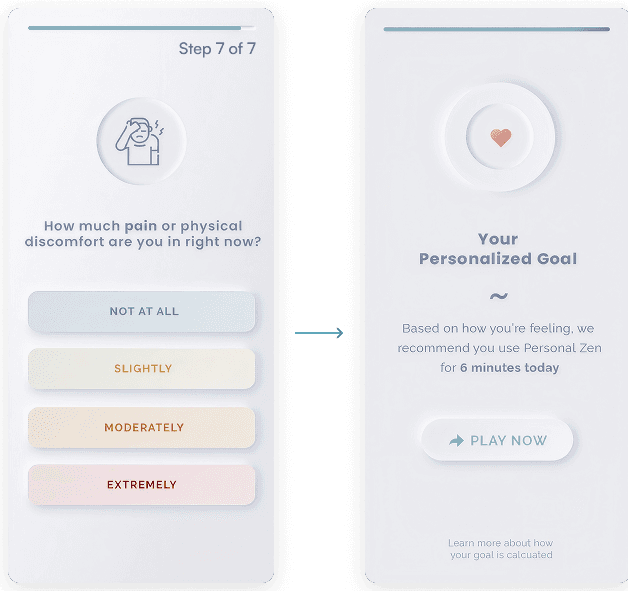
After completing the initial game instructional flow, as a user, I found myself required to fill out a brief anxiety self-assessment survey, for a suggested playtime for the core gameplay. Several survey questions (a total of 7 screens) were presented before you get to personalized goal screen.

Assessment → Personalized Recommendation

After completing the initial game ol flow, users are required to fill out a brief anxiety self-assessment survey, receiving a suggested playtime for the core gameplay. Several survey questions are presented before you get to personalized goal screen.
Guided Feedback


Onboarding Tutorial

Onboarding copy required user to read multiple instructional messages before gameplay.
Competitive
Analysis
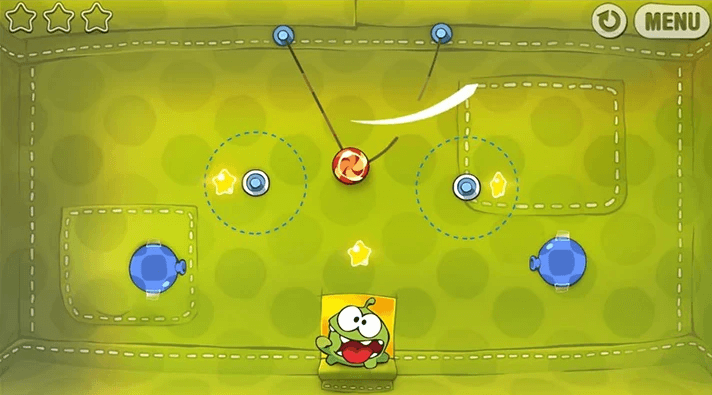
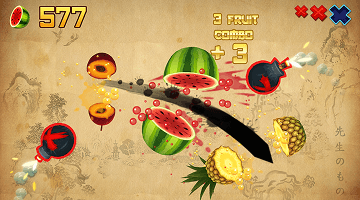
To explore ways to boost engagement, I analyzed popular mobile games like Cut the Rope and Fruit Ninja, chosen for their similar mechanics and strong engagement loops. While few apps applied gaming mechanics to therapy, these titles revealed surface key gamification strategies and game elements such as: Onboarding (gamification, Points systems, Progress Indicators, End-of-session summary screens.
What this Reveled
We removed high-pressure elements (timers, penalties, competitive scoring) to preserve the app’s therapeutic value.

Cut the Rope
What Works
Intuitive, low-friction touch interactions.
Beginner-friendly onboarding.
Short game levels that encourage stress-free replay.
Where It Breaks Down
Precision-heavy mechanics can frustrate users.
Restarting after failure can feel punishing rather than encouraging.
Feature patterns observed across popular casual game apps, reference patterns
drawn from casual games with high engagement and low cognitive load.
Game Design
Development
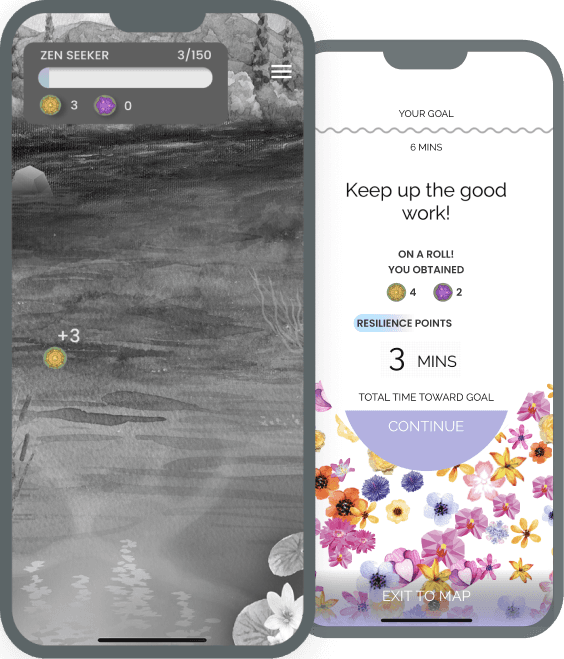
Working from these research insights, I set out to redesign both the onboarding and core gameplay to foster steady, mindful engagement rather than excitement or stress.


What Changed in Gameplay
These changes reframed progress as calm encouragement rather than performance pressure.
Points System
+3
Gentle, non-competitive rewards
for participation.
Progress Meter

Visual indicator of advancement within a session.
End-of-Play Summary

Gentle, non-competitive rewards
for participation.
Prototyping
and Testing
After several design critiques and stakeholder reviews, high fidelity wireframes were made into a clickable prototype for remote usability sessions via participants recruited via Respondent.io.
Each session was facilitated using a structured script with participants playing the current and the new game experience, key insights were later synthesized and shared with key stakeholders. ? DO I PUT. KEY DECISON OR DESIGN CHANGES HERE?
Research Setup
Participants
Who We Tested
Nine (9) Users
How We Tested
45 min moderated sessions (Zoom)
Research Questions
Did you prefer the original game or the prototype?
How did you feel about the summary screen?
Any thoughts on the points meter?
Evaluation Focus
Comprehension of new onboarding flow
Emotional response to
points and progressMotivation to replay sessions
Key Insight from Testing
9
7
said
“The version with the points was more motivating to play vs. the gameplay in the app.”
Over half of participants found the updated gameplay more engaging
Key Decisions and Outcomes
Challenge #1
Users found the Resilience Meter and the term “resilient” confusing and demotivating.
“Not a fan of the resilience meter; the app telling me I’m resilient doesn’t sit right.”
Decision
We removed the Resilience Meter in favor of a simpler, more calming game summary, reinforcing session completion and participation without assigning evaluative labels.
Challenge #2
Users were unclear about the purpose of collecting medallions and expected trade-in or reward options.
“I guess you collect the medallions, I don’t know what those are for.”
Decision
Research on game reward screens informed low-fidelity designs, with the most intuitive option selected through stakeholder review.
Testing clarified how progress and rewards should be framed to motivate continued play.
The
Outcome
While no formal metrics were tracked post-game enhancementlaunch, early qualitative feedback suggested the redesign meaningfully improved perceived engagement and emotional connection.
Reflections
As the sole UX designer, I was responsible for everything from research to interface design and testing. Through this process, I learned how purposeful gamification can complement, not contradict, mindfulness.
Participants described the new experience as:
“More Structured and calming”
“ Encouraging without being competitive ”
“Rewarding without feeling like a game”
What’s Next
Potential opportunities to improve upon beyond the scope of this project.
Assess Long Term Engagement
Track user behavior over time to guide future adjustments.
Refine Motivating Features
Continue evaluating which interactions feel most engaging and adjust features to gently encourage consistent use.
Introduce lightweight analytics tracking for engagement validation
Make sure visuals, gestures, and language support users with varying cognitive and emotional needs.
Thank you for reading! Explore other work
2023
Mental Health | Game Design | Mobile
Mindful
Retention
Inviting Users Back with
Purposeful Play
View the Case Study